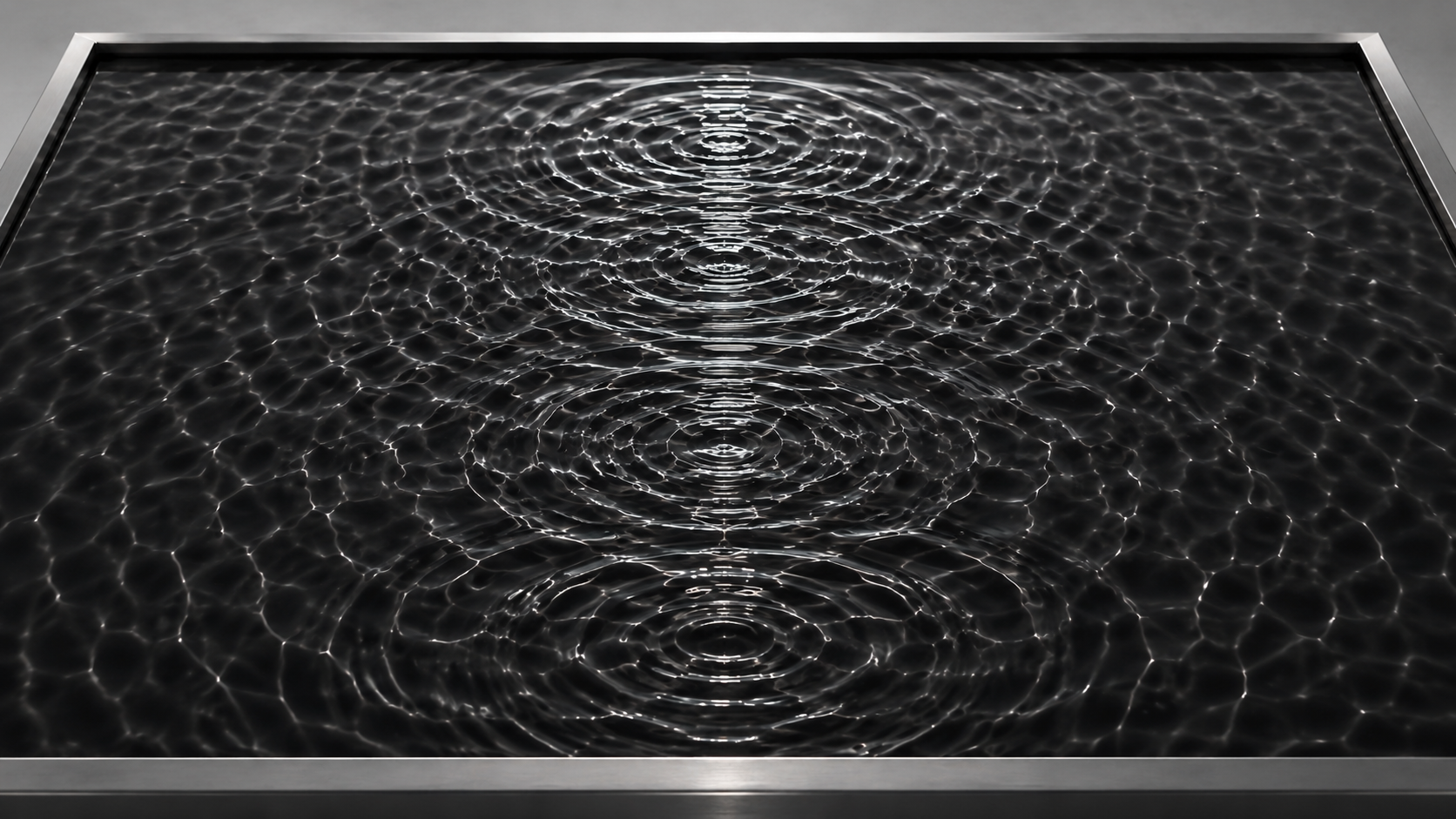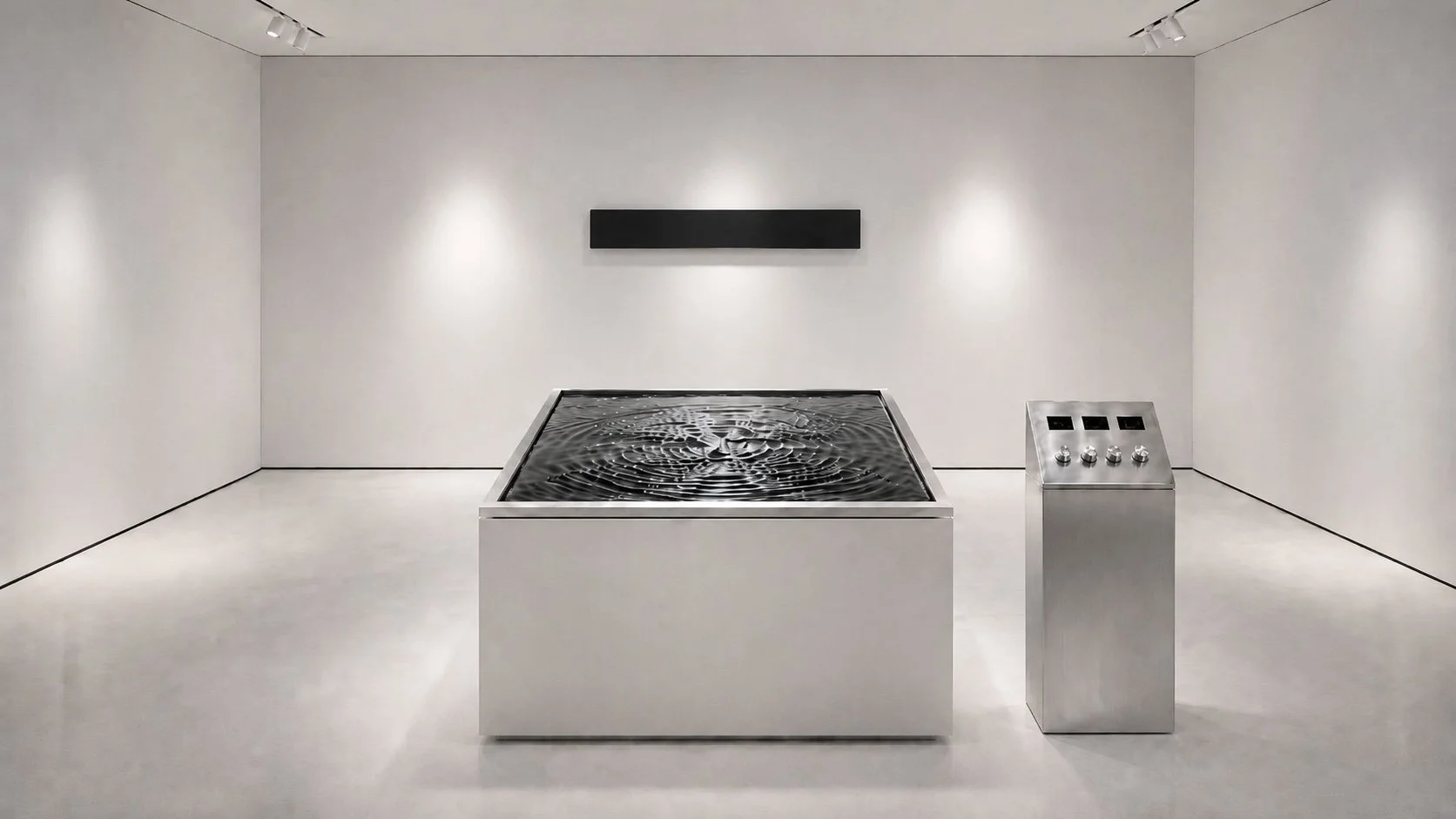
AI-generated concept visualization of the proposed installation.
The Installation - Making underwater noise visible
Silent Pollution is a physical sound installation that transforms underwater recordings from Lake Sevan into sound, vibration and movement.
At the center of the installation, a shallow surface of water is activated by acoustic information extracted from recorded anthropogenic noise. The data is translated into vibration, generating changing ripples, structures and patterns across the water surface.
Visitors interact with a four-channel analogue control system, introducing and combining different anthropogenic underwater recordings against the continuous ambient underwater soundscape of Lake Sevan.
Each recording remains connected to its environmental and acoustic data, including location, depth, time, frequency range and measured sound level. Where scientifically supported, the installation also provides ecological context about species present and the potential effects of acoustic interference.
Through sound, data and physical interaction, Silent Pollution transforms an invisible underwater condition into something that can be heard, seen and physically experienced.
At the center is a 1 × 1 meter structure with a shallow water basin. Beneath it, a steel grid connected to a low-frequency sound system transfers underwater recordings into physical vibrations, creating changing patterns and textures on the water surface.
Beside it, an analog-style control console allows visitors to mix four separate sound channels and experience how natural underwater sounds and human-made noise overlap and interfere with one another.
The installation transforms underwater acoustic pollution into something audible, visible, and physical. Scientific data provides context, while the sensory experience remains central.
This compact version can later expand into a larger installation with multichannel sound, projection, sensors, live underwater feeds, and recordings from other aquatic ecosystems.
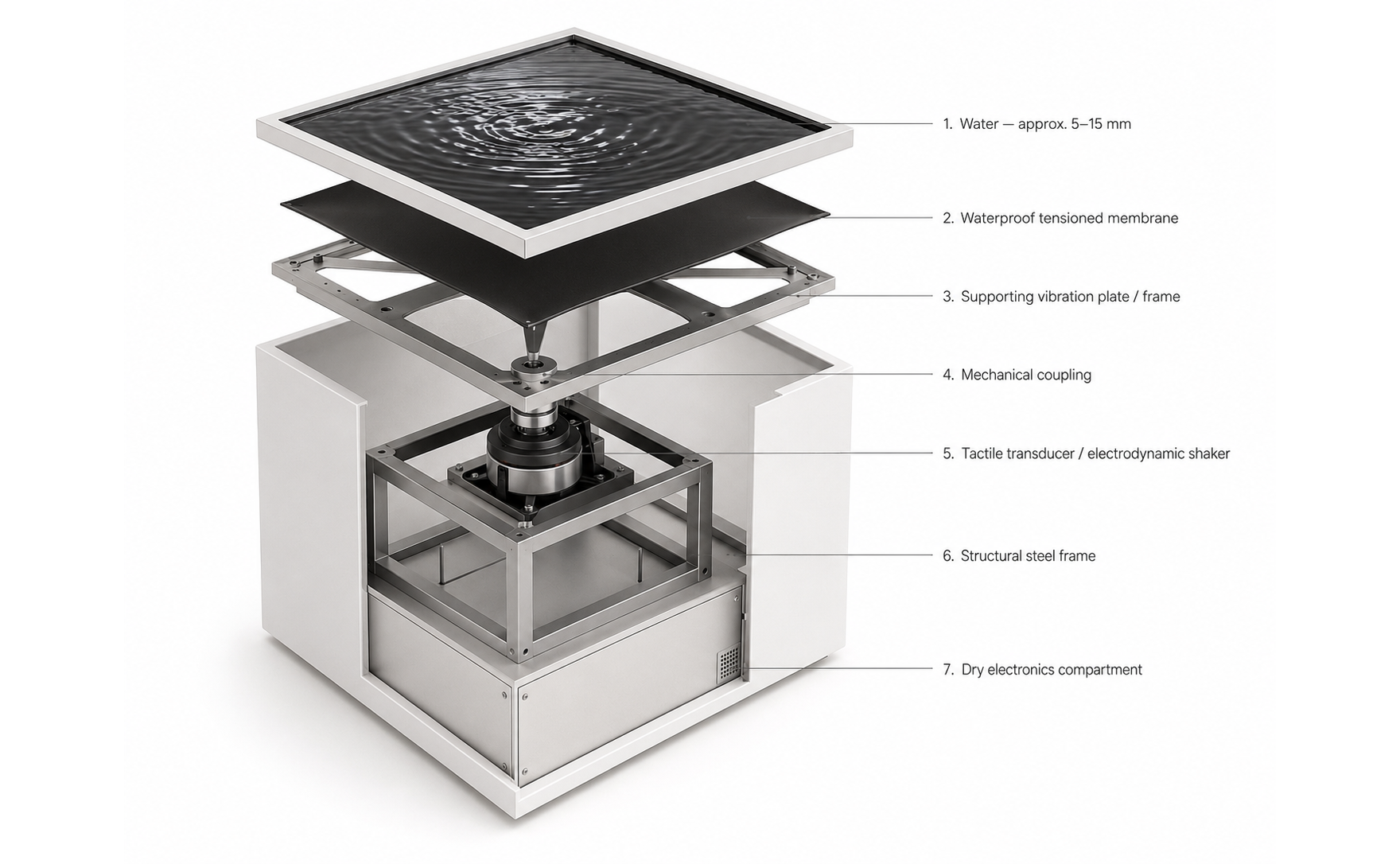
The central object is built as a sealed vibration system. A shallow layer of water rests above a tensioned waterproof membrane, while a mechanically coupled transducer below converts acoustic data into movement. The structural frame keeps the water, vibration system and electronics safely separated.
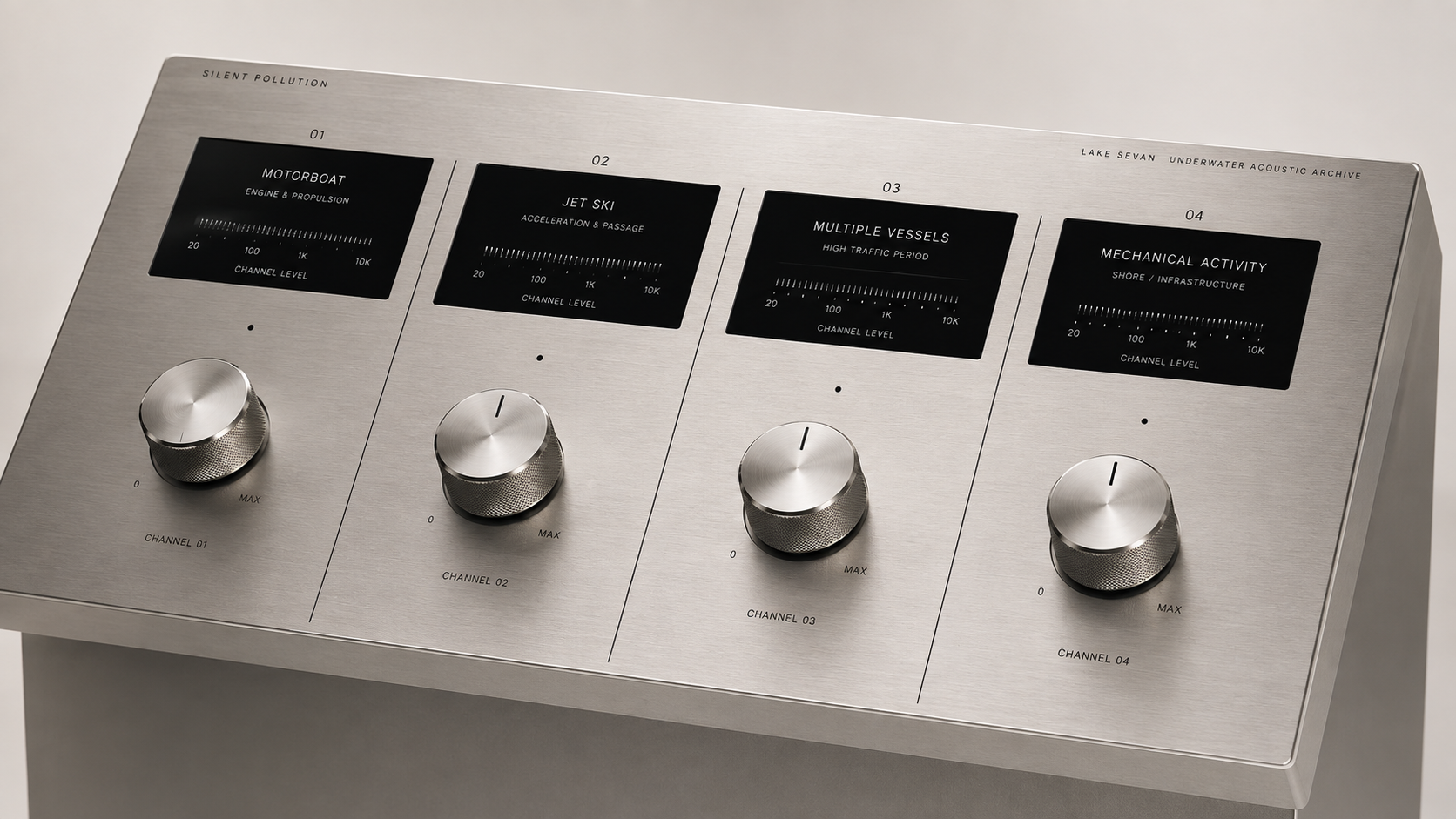
Each control activates a different anthropogenic sound recorded underwater. The display reveals the source, location, depth, frequency range and other acoustic data, allowing visitors to explore each recording individually or combine several sources into one soundscape.
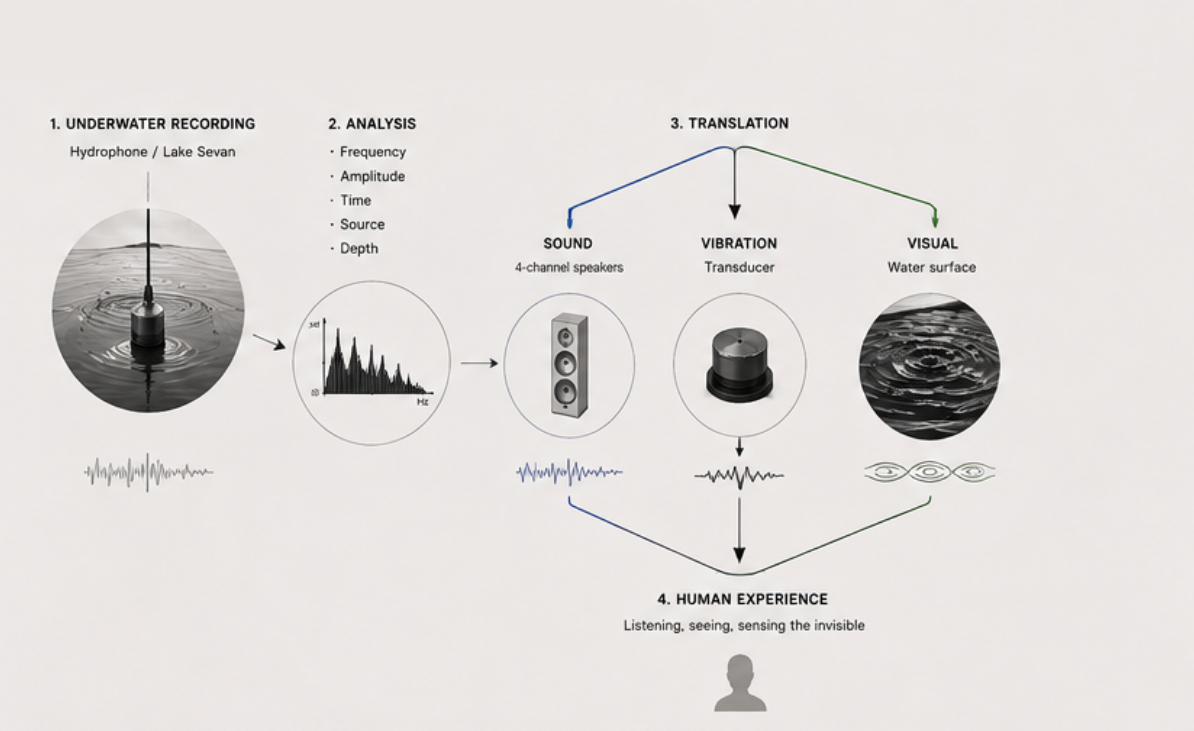
Underwater recordings from Lake Sevan are analysed through frequency, amplitude, time, source and depth. This information is translated simultaneously into spatial sound, physical vibration and visible movement across the water surface—allowing the visitor to hear, see and sense an otherwise invisible acoustic environment.
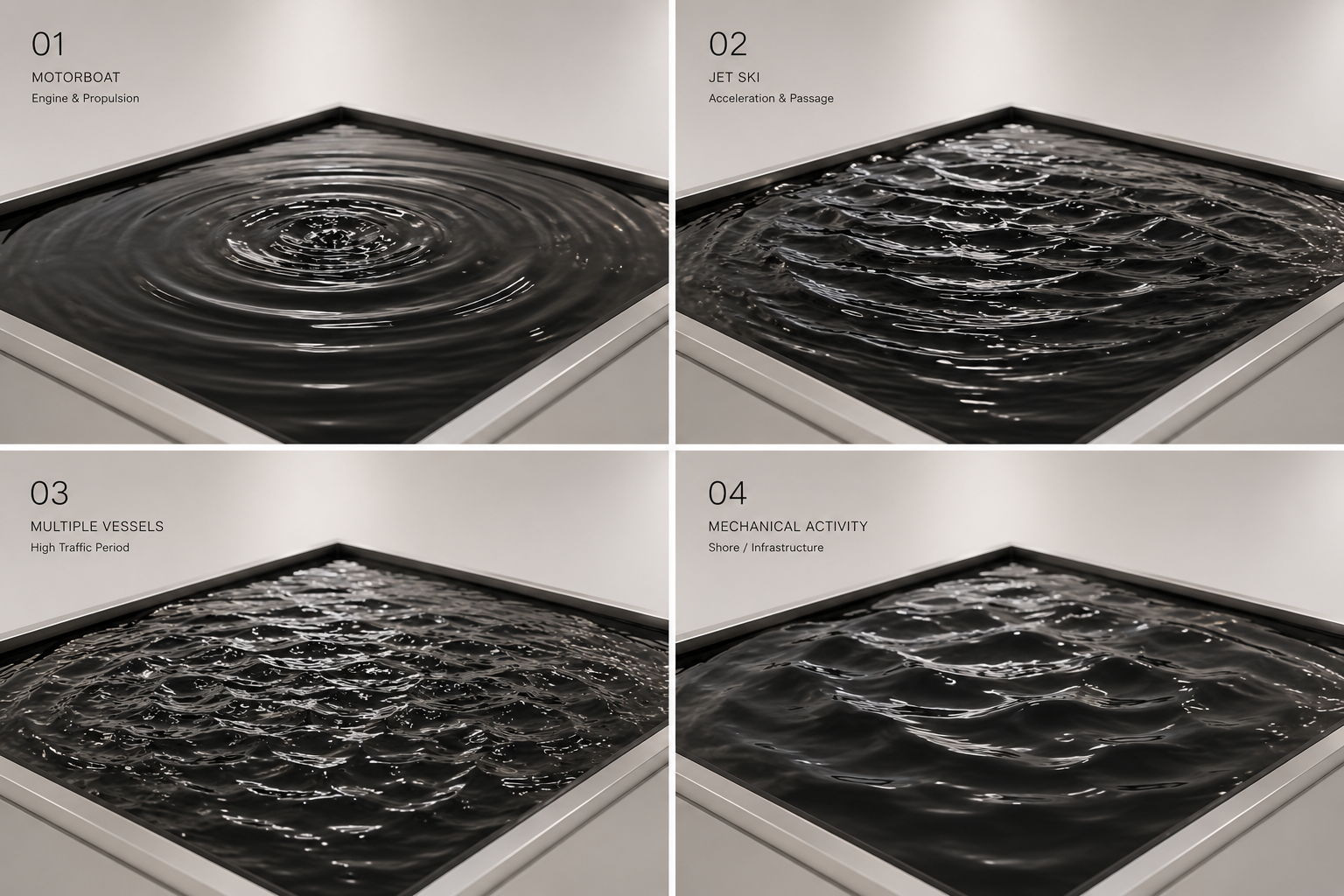
Each recording carries a different acoustic signature. As frequency and intensity change, the vibration system produces different movements, patterns and textures across the water surface—turning invisible acoustic information into a physical visual response.
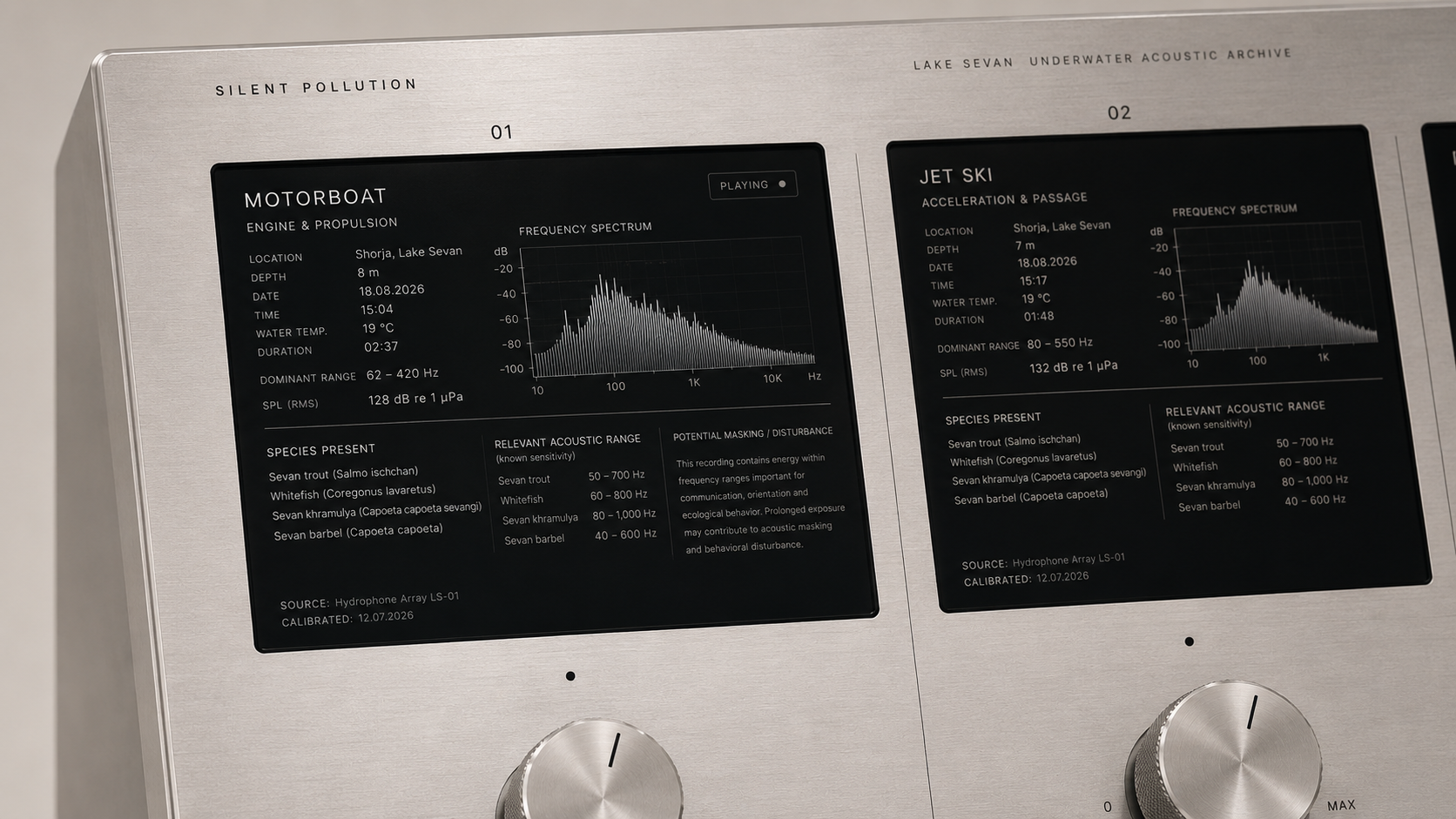
Each recording remains connected to the conditions in which it was captured. The interface displays its source, location, depth, time, frequency spectrum and measured sound level, alongside scientifically verified ecological information where available. The data transforms each sound from an abstract noise into a documented event within Lake Sevan.

At the center is a 1 × 1 meter water structure activated by underwater recordings from Lake Sevan. The visitor controls four independent sound channels through a physical console, gradually transforming the acoustic environment and the movement of the water.